Education Programs
It is our shared vision to educate, inspire, and build community through various programs that promote bee health and provide community scientists with the tools to take action in their neighborhoods.
Program Overview
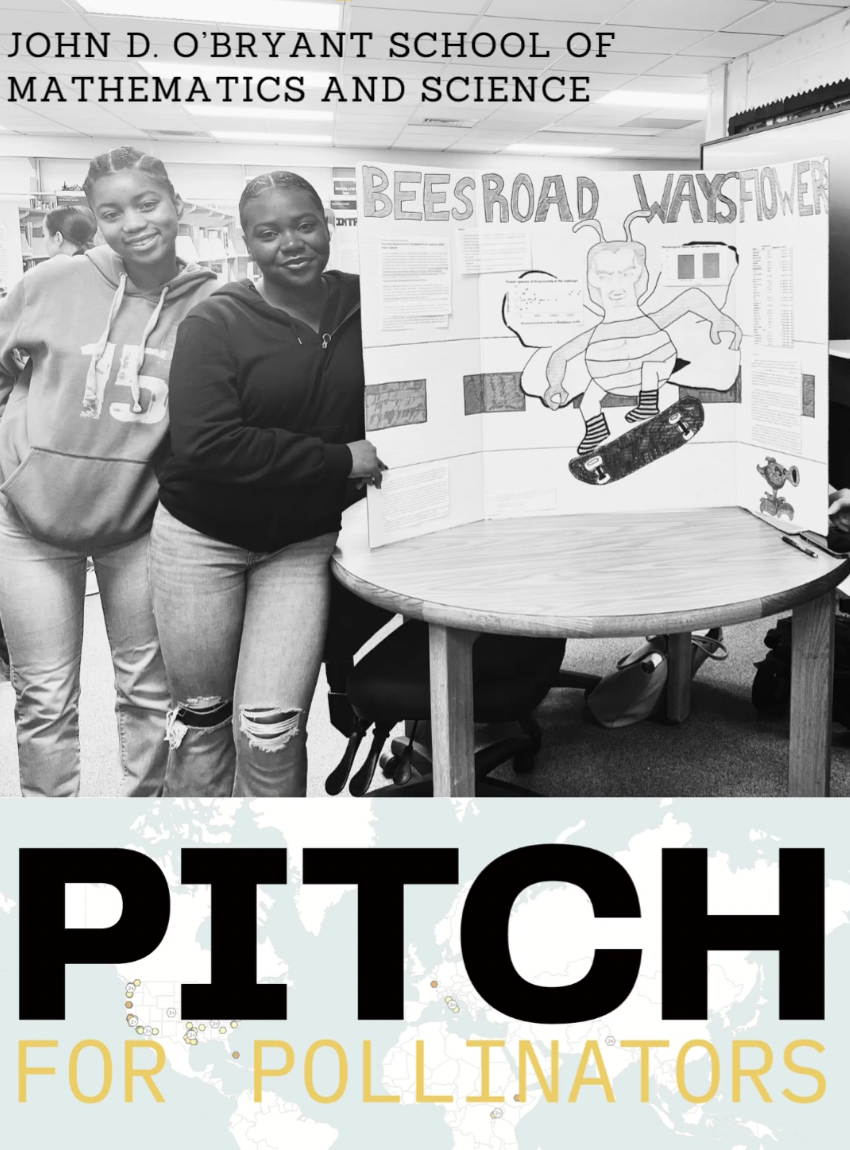
A UBL team of volunteers received a warm welcome at the John D. Obryant School of Math and Science for their 12th-grade science fair presentations. Thanks to grant funding UBL supported these students who have been working with our data for the last few months. They came up with really impressive testable questions, applied scientific methods, and included advanced statistical analysis!
Free Online Classroom Toolkit
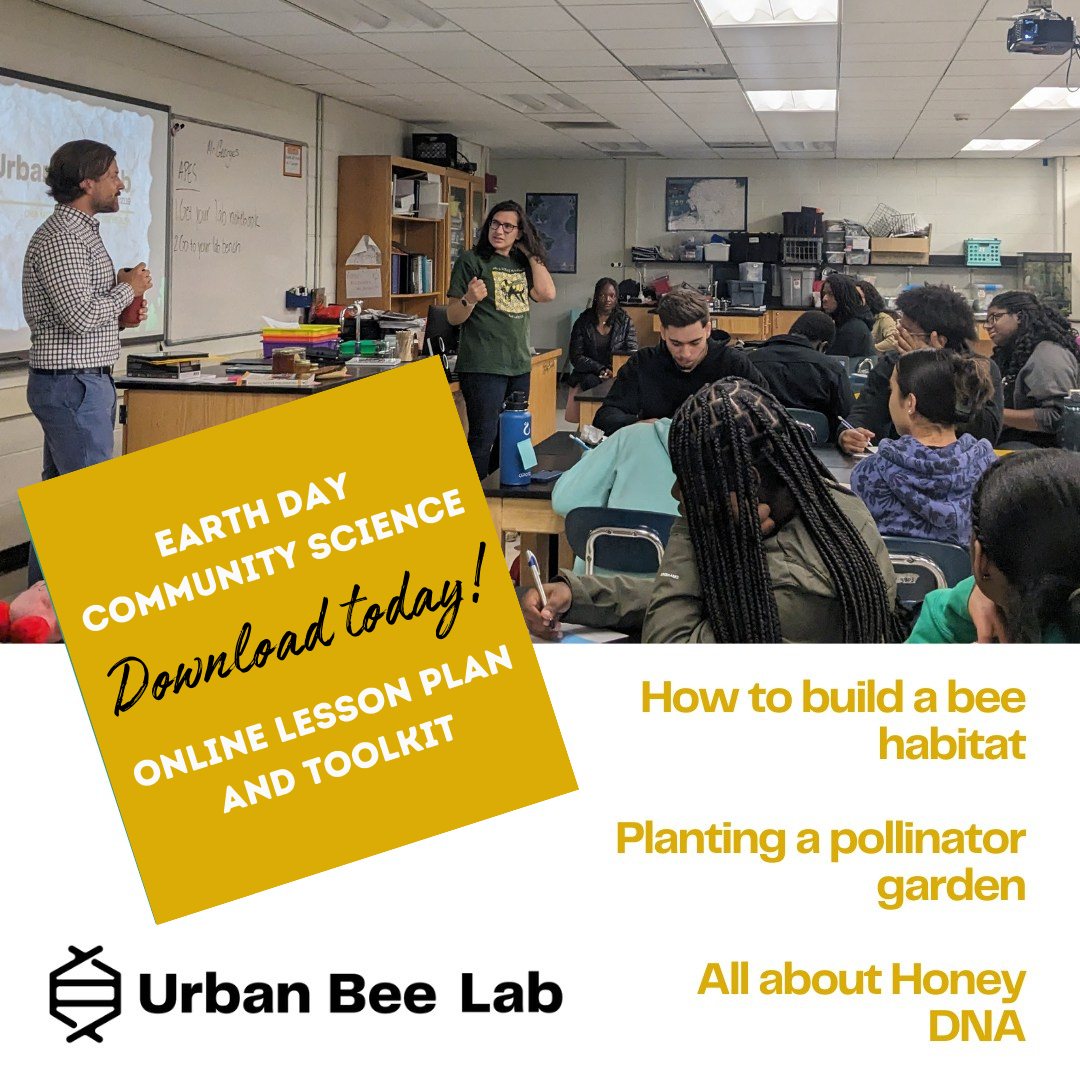
UBL is offering a free lesson plan and online toolkit for educators and students who are interested in bees, beekeeping, HoneyDNA, and community science! Click below to download them in PDF format.
Parish Land & Community Pilot
A 12-Month Community-Building Initiative Rooted in Laudato Si’
Framing
Laudato Si’ calls the Church to an integral vision of ecology—one that unites care for creation, care for the poor,
and the rebuilding of human community. Parish land offers a tangible way to embody this call locally. This pilot
evaluates whether intentional ecological design can strengthen parish life, visible witness, and community
participation.
Purpose
To test whether a modest pollinator habitat on parish property can function as community-building infrastructure
while reflecting the Church’s commitment to integral ecology.
Scope (Year One)
- Select one defined underutilized parcel (e.g., lawn edge or open green space).
- Commission a regionally appropriate pollinator habitat design.
- Form one parish stewardship team to oversee installation and care.
Intended Community Outcomes
- Increase visible participation in shared parish activity.
- Create intergenerational volunteer opportunities.
- Strengthen parish identity through shared stewardship.
- Provide modest harvest for hospitality, liturgy, or charitable use.
Implementation Phases
- Discernment (0–2 months): Site selection, leadership alignment, modest budget approval.
- Installation (3–6 months): Native planting with community participation.
- Stewardship (6–12 months): Ongoing volunteer care and integration into parish life.
Evaluation Metrics
Volunteer participation levels.
- Maintenance cost comparison to prior lawn care.
- Integration into parish programming.
- Community visibility and engagement.
This initiative does not introduce a new program. It reframes land already maintained as a modest, disciplined experiment in community formation aligned with the global wellness vision articulated in Laudato Si’.